
Navigating Software Supply Chain Security: Why NixOS is the Future of Compliance and Reproducibility
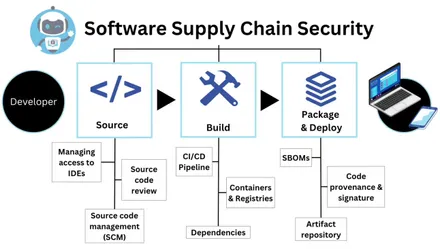
In the rapidly evolving landscape of Linux news, few topics have garnered as much attention recently as software supply chain security and regulatory compliance. As governments worldwide, particularly within the European Union, move toward stricter standards for software transparency and liability (such as the Cyber Resilience Act), the open-source community faces a pivotal moment. While headlines often focus on Ubuntu news regarding Snap packages or Red Hat news concerning enterprise licensing, a fundamental shift is occurring in how we build, distribute, and audit software. This is where NixOS, a unique distribution built on a purely functional package manager, is stepping into the spotlight.
The traditional imperative model used by distributions—whether it is Debian news covering apt-get cycles or Arch Linux news focusing on rolling updates—often struggles with the strict demands of absolute reproducibility. When a system administrator runs an update, the resulting state is often a product of the specific time that command was executed. In contrast, NixOS offers a declarative approach that aligns perfectly with the growing demand for Software Bills of Materials (SBOMs) and immutable infrastructure. This article explores how NixOS addresses these modern security challenges, offering a technical deep dive into achieving compliance through code.
The Declarative Model: A Foundation for Security
To understand why NixOS is becoming a focal point in Linux security news and Linux DevOps news, one must understand the Nix store. Unlike the Filesystem Hierarchy Standard (FHS) used by Fedora news or CentOS news outlets to describe file placement (like /usr/bin), Nix stores all packages in unique directories hashed by their build inputs. This means that if a dependency changes—even a compiler flag—the hash changes, and it becomes a distinct package.
This architecture inherently solves the “dependency hell” problem often discussed in Python Linux news or Node.js circles. More importantly, it provides an exact audit trail. For organizations worried about compliance, NixOS configuration files serve as living documentation of the system’s state. There is no drift; the code is the infrastructure.
Below is an example of a basic, secure web server configuration. Unlike configuring Apache Linux news tutorials that rely on editing mutable files in /etc, this configuration is atomic. If the build fails, the system does not switch to the new generation, preventing partial outage states.
{ config, pkgs, ... }:

{
  imports =
    [ # Include the results of the hardware scan.
      ./hardware-configuration.nix
    ];

  # Bootloader configuration
  boot.loader.systemd-boot.enable = true;
  boot.loader.efi.canTouchEfiVariables = true;

  # Networking
  networking.hostName = "secure-nixos-node";
  networking.firewall.allowedTCPPorts = [ 80 443 ];

  # System Packages - The declarative list of installed software
  environment.systemPackages = with pkgs; [
    vim
    git
    htop
    vulnix # Vulnerability scanner for Nix
  ];

  # Service Configuration: Nginx with security headers
  services.nginx = {
    enable = true;
    recommendedGzipSettings = true;
    recommendedOptimisation = true;
    recommendedTlsSettings = true;

    virtualHosts."example.com" = {
      forceSSL = true;
      enableACME = true; # Auto Let's Encrypt
      root = "/var/www/example.com";

      locations."/" = {
        index = "index.html";
        extraConfig = ''
          add_header X-Frame-Options SAMEORIGIN;
          add_header X-Content-Type-Options nosniff;
        '';
      };
    };
  };

  # Automatic Upgrades with Rollback capability
  system.autoUpgrade = {
    enable = true;
    allowReboot = false;
    channel = "https://nixos.org/channels/nixos-23.11";
  };

  system.stateVersion = "23.11";
}
In this example, the entire state of the Nginx service, including security headers and SSL handling, is defined in one place. This contrasts sharply with Linux administration news for traditional distros where configuration is scattered. If an auditor asks, “What version of OpenSSL was linked against Nginx?”, Nix can answer definitively based on the hash of the derivation.
Reproducibility and Flakes: The Compliance Answer
As we analyze Linux open source news, the concept of “Flakes” in the Nix ecosystem has revolutionized how we handle project dependencies. Flakes introduce a flake.lock file, similar to package-lock.json in JavaScript or Cargo.lock in Rust Linux news, but for the entire operating system and its toolchains. This is critical for regulatory compliance.
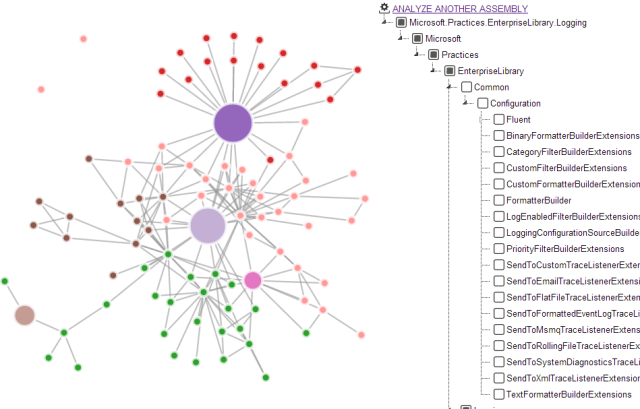
When the European Commission or other regulatory bodies discuss the resilience of software, they are essentially asking: “Can you rebuild this exact binary 10 years from now to patch a vulnerability?” For users of Manjaro news or Linux Mint news, this is difficult because repositories shift. Nix Flakes pin every input (nixpkgs, custom overlays, source code) to a specific Git commit hash.
Here is how a Flake is structured to ensure that a development environment is bit-for-bit reproducible across all developer machines, regardless of whether they are on Linux laptop news hardware or cloud instances.
{
  description = "A compliant, reproducible infrastructure flake";

  inputs = {
    # Pinning nixpkgs to a specific commit for auditability
    nixpkgs.url = "github:nixos/nixpkgs/nixos-23.11";

    # Importing a custom security overlay
    security-tools.url = "github:example/security-tools/v1.2.0";
    security-tools.inputs.nixpkgs.follows = "nixpkgs";
  };

  outputs = { self, nixpkgs, security-tools, ... }:
    let
      system = "x86_64-linux";
      pkgs = import nixpkgs {
        inherit system;
        overlays = [ security-tools.overlay ];
        # Allow unfree packages only if explicitly audited
        config.allowUnfree = true;
      };
    in {

    nixosConfigurations.production-server = nixpkgs.lib.nixosSystem {
      inherit system;
      modules = [
        ./configuration.nix
        ./security-hardening.nix
      ];
    };

    # A reproducible shell for developers
    devShells.${system}.default = pkgs.mkShell {
      buildInputs = with pkgs; [
        go
        gopls
        terraform
        trivy # Container security scanner
      ];

      shellHook = ''
        echo "Environment loaded. Hash: $(nix --version)"
        echo "Compliance checks enabled."
      '';
    };
  };
}
By using this structure, an organization can prove that the version of Go Linux news tools used to build their binary in CI is identical to the version used by the developer. This eliminates the “it works on my machine” class of bugs and provides a concrete chain of custody for software artifacts.
Advanced Auditing: Generating SBOMs and Vulnerability Scanning
The intersection of Linux security news and package management is where Nix shines brightest. Because Nix knows the entire dependency graph (DAG) of every package, generating a Software Bill of Materials (SBOM) is not an afterthought—it is an inherent capability of the store. Unlike scanning a Docker container after the fact (common in Docker Linux news), Nix can report on dependencies before the software is even deployed.
Advanced users can leverage the Nix API or external tools to query the store database. While tools like Ansible news or Chef news focus on configuration management, they often lack deep introspection into binary linkage. Nix allows us to query exactly which shared libraries are required by a binary.
Below is a Python script that interacts with the Nix store to audit dependencies. This is useful for DevSecOps teams who need to integrate NixOS auditing into their wider compliance dashboards. This touches on Python Linux news and Linux automation news.
import subprocess
import json
import sys

def get_nix_dependencies(store_path):
    """
    Retrieves the full dependency tree of a Nix store path.
    """
    try:
        # nix-store -q --graph returns a DOT graph, but --references is cleaner for lists
        result = subprocess.run(
            ['nix-store', '-q', '--references', store_path],
            capture_output=True,
            text=True,
            check=True
        )
        return result.stdout.strip().split('\n')
    except subprocess.CalledProcessError as e:
        print(f"Error querying nix-store: {e}")
        return []

def check_for_vulnerable_openssl(dependencies):
    """
    Scans dependencies for known bad versions of OpenSSL.
    This is a heuristic example; in production, use CVE databases.
    """
    vulnerable_versions = ['openssl-1.1.1t', 'openssl-3.0.7']
    issues = []

    for dep in dependencies:
        for bad_ver in vulnerable_versions:
            if bad_ver in dep:
                issues.append(dep)

    return issues

if __name__ == "__main__":
    if len(sys.argv) < 2:
        print("Usage: python audit_nix.py ")
        sys.exit(1)

    target_path = sys.argv[1]
    print(f"Auditing dependencies for: {target_path}")

    deps = get_nix_dependencies(target_path)
    print(f"Found {len(deps)} direct dependencies.")

    vulnerabilities = check_for_vulnerable_openssl(deps)

    if vulnerabilities:
        print("\n[CRITICAL] Vulnerable dependencies found:")
        for v in vulnerabilities:
            print(f" - {v}")
        sys.exit(1)
    else:
        print("\n[PASS] No flagged OpenSSL versions found in direct dependencies.")
        sys.exit(0)
This script demonstrates the transparency of the Nix store. In a Linux enterprise environment, you could wrap this logic to feed into ELK Stack news (Elasticsearch, Logstash, Kibana) or Grafana news dashboards, providing real-time visibility into the compliance status of your fleet.
Best Practices for Infrastructure and Optimization
Adopting NixOS requires a shift in mindset. Whether you are coming from Gentoo news (compiling everything) or Alpine Linux news (minimalism), there are best practices to ensure your system remains performant and secure.

1. Garbage Collection and Storage Management
Because Nix creates a new file path for every update, the /nix/store can grow indefinitely. This is often discussed in Linux filesystems news regarding Btrfs or ZFS snapshots. NixOS handles this via Garbage Collection (GC). However, in a production environment, you must configure this carefully to avoid deleting build dependencies you might need for a quick rollback.
2. Continuous Integration (CI/CD)
Integrating Nix into GitLab CI news or GitHub Actions Linux news pipelines is the gold standard. You should use binary caches (like Cachix) to speed up builds. If you don’t, your CI will rebuild the world on every commit, which is costly.
3. Secret Management
One pitfall of the Nix store is that it is world-readable. Never put API keys or passwords directly in your configuration.nix. Instead, use tools like sops-nix or git-crypt. This aligns with Linux encryption news best practices.
Here is a practical Bash script snippet that could be used as a maintenance hook or cron job (Linux systemd timers news) to keep a system healthy without breaking the immutable history.
#!/usr/bin/env bash

# Maintenance script for NixOS servers
# Best run via systemd timer, not standard cron

set -e

echo "Starting System Maintenance..."

# 1. Check for failed systemd services
failed_services=$(systemctl list-units --state=failed --no-legend)
if [ -n "$failed_services" ]; then
    echo "CRITICAL: The following services are in a failed state:"
    echo "$failed_services"
    # In a real scenario, trigger an alert via PagerDuty/Slack
fi

# 2. Garbage Collect old generations (keep last 14 days)
# This prevents the disk from filling up with old kernel versions
echo "Running Garbage Collection..."
nix-collect-garbage --delete-older-than 14d

# 3. Optimize the store
# This hard-links identical files to save space (deduplication)
echo "Optimizing Nix Store..."
nix-store --optimise

# 4. Verify Store Integrity
# Checks if any files in the store have been corrupted (bit rot)
echo "Verifying Store Integrity..."
nix-store --verify --check-contents

echo "Maintenance complete."
This script highlights the operational reality of NixOS. While the OS is robust, standard Linux monitoring news practices still apply. You must monitor disk space, especially since the Nix store is append-only by default.
Conclusion: The Path Forward
The recent discourse in the open-source community regarding liability and cyber resilience highlights a critical need for systems that are transparent, auditable, and reproducible. While Linux kernel news continues to push the boundaries of hardware support and performance, the user-space management provided by NixOS offers a solution to the “supply chain” problem that traditional distributions struggle to address.
By treating infrastructure as code—literally—NixOS allows organizations to generate accurate SBOMs, rollback instantly in the event of a breach, and prove compliance with emerging regulations. Whether you are following Kali Linux news for penetration testing or Rocky Linux news for enterprise servers, the principles pioneered by Nix are influencing the entire ecosystem. As we move toward a more regulated digital future, the ability to mathematically prove what is running on your servers will transition from a “nice-to-have” feature to a legal requirement. NixOS is already there.